Case Study | Rhino Rewild by African Parks
Creating a microsite and donation experience for an African nonprofit
Project Overview
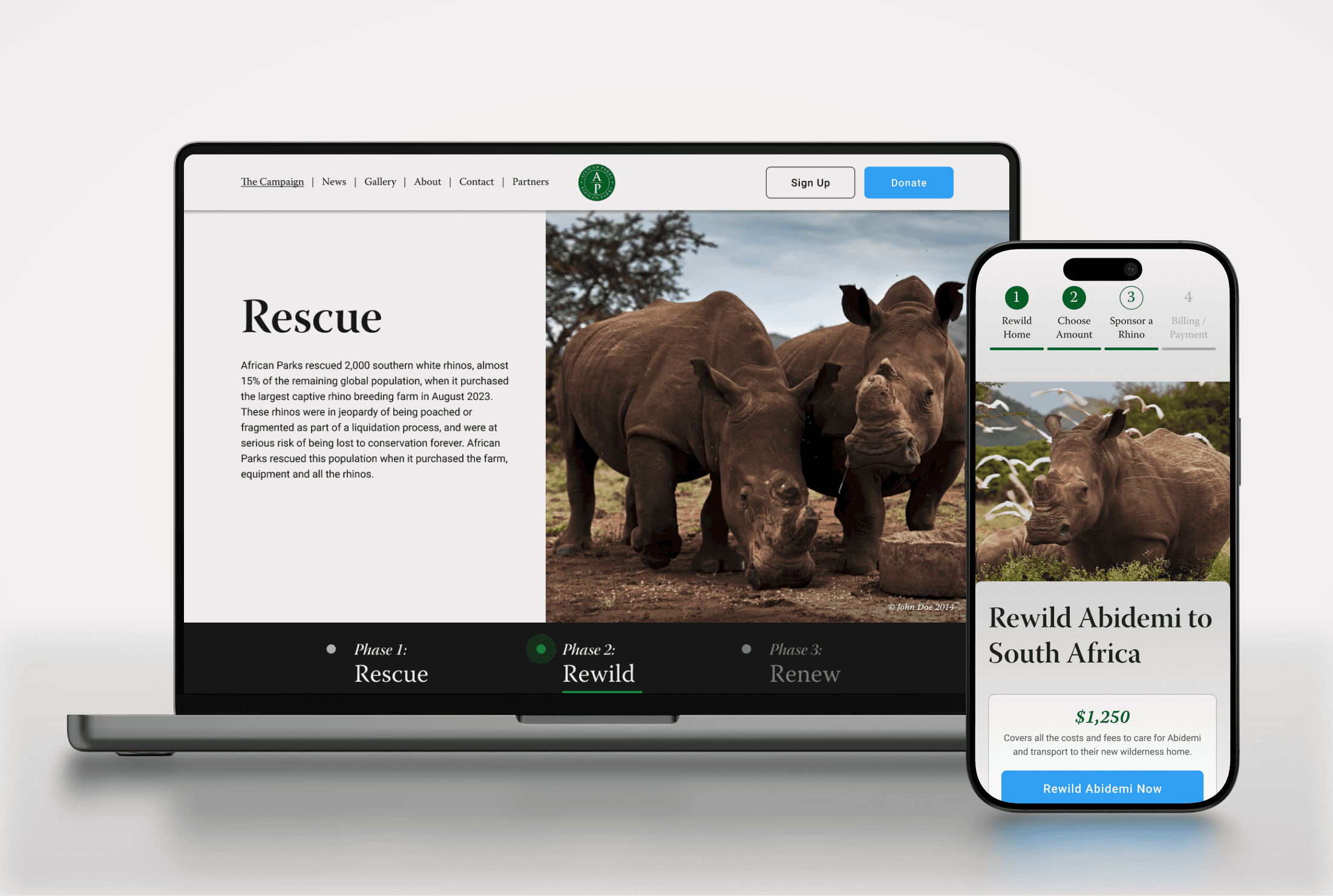
Rhino Rewild is a campaign led by the nonprofit African Parks to "rewild" 2,000 rhinos to African wilderness locations. Through my work with Brick Factory I led the design of a microsite for the campaign as well as a unique donation experience.
Client
African Parks
Agency
Brick Factory
Industry
Nonprofit
Year
2023-2024
Role
Lead Product Designer
About the Project
Summary
A microsite and fundraising platform
Build a dedicated microsite to showcase African Parks’ new “Rhino Rewild” program—aimed at relocating 2,000 rhinos into protected wilderness—and create a donation flow that speaks to both small contributors and large sponsors.
The Problem
Why it mattered
African Parks’ main website already covers all its programs, but Rhino Rewild needed its own home to:
Inspire & Inform: Explain the three-phase “Rescue → Rewild → Renew” story in an engaging, easy-to-navigate way.
Drive Donations: Craft two donation pathways for both small and big-gift donors
Phase 1:
Microsite Main Content
Design Exploration
I began by focusing on the homepage, particularly the hero area, which needed to immediately communicate the campaign’s story and emotional stakes. I explored several full-viewport hero concepts using African Parks’ striking imagery and dramatic video footage.While the video-based designs were visually compelling—including iterations with full-screen playback and a rhino-shaped clipping mask—we ultimately decided, as a team, that the performance tradeoffs were too high for a fundraising site. Fast loading and accessibility took priority.
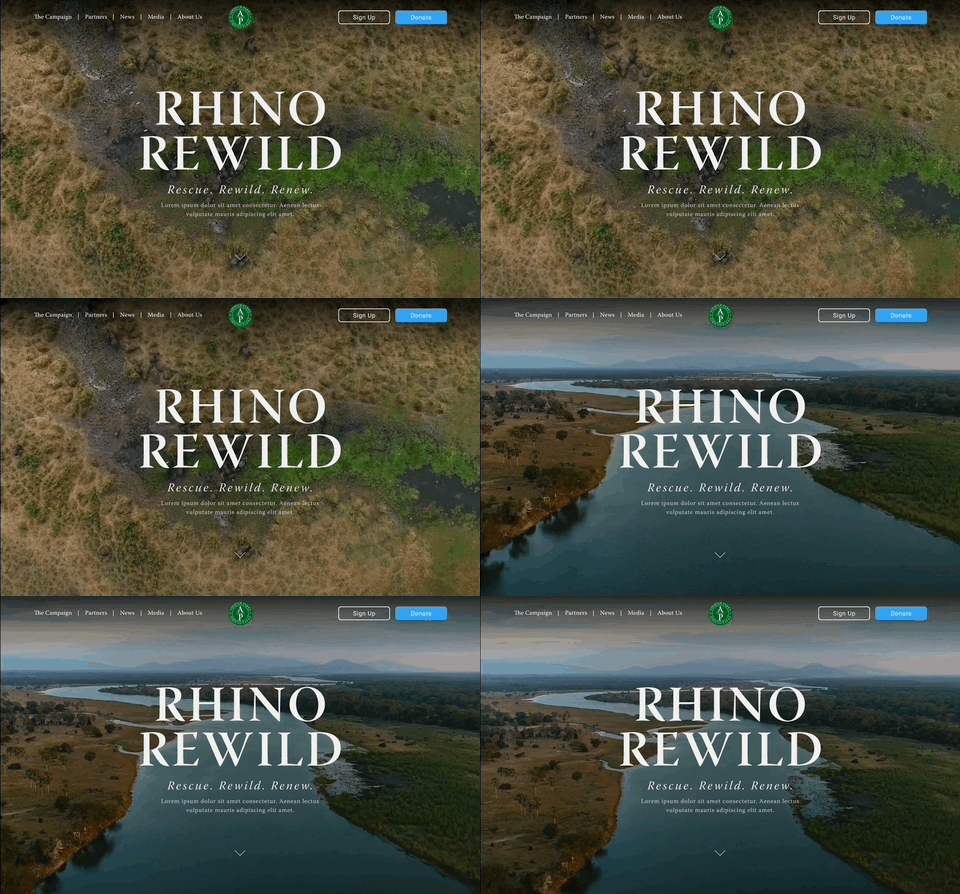
A full screen background video hero iteration.
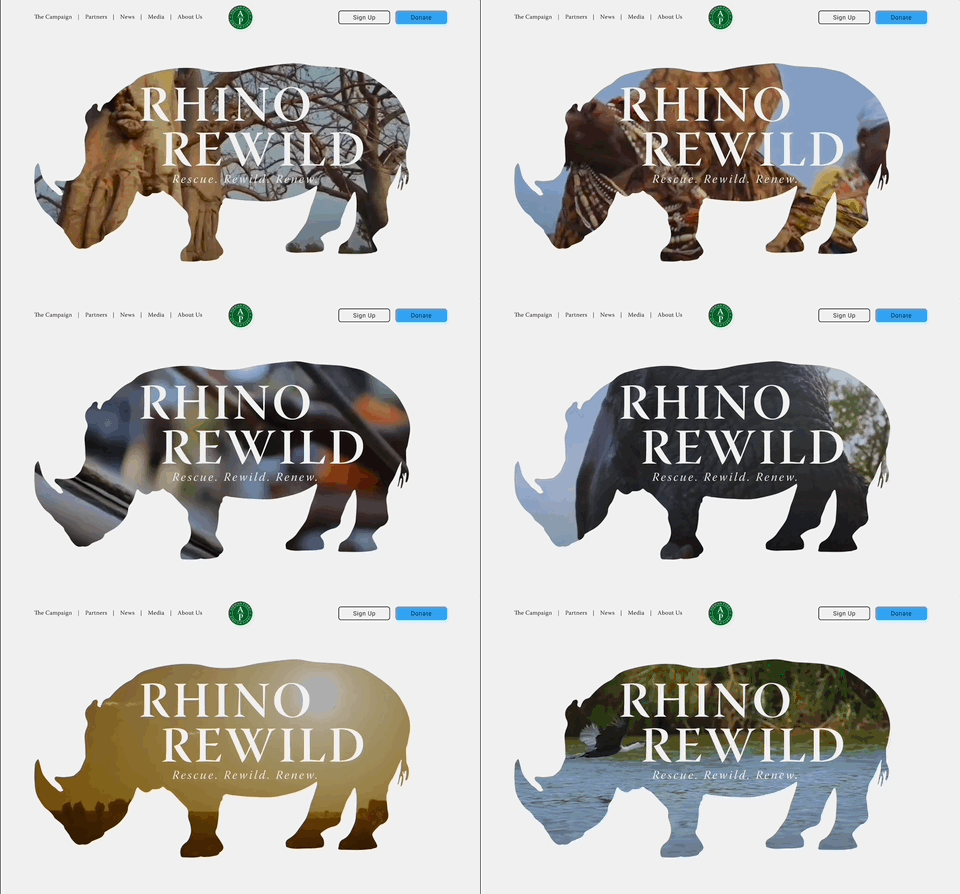
A video with clipping mask.
We landed on a full-screen static image paired with a subtle fade-in and movement effect to preserve visual impact without sacrificing speed. The hero includes a clear call to action (“Donate”) and a “Learn More” button that guides users into the campaign narrative. The African Parks brand is also prominently featured to build trust.
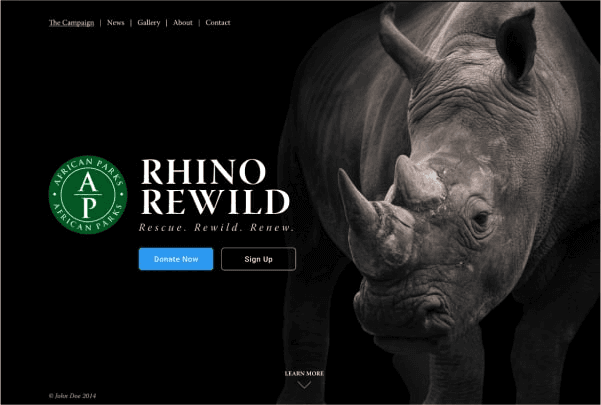
Final hero design
Story-Driven Page Layout
The homepage walks users through the Rhino Rewild process in three narrative sections: Rescue, Rewild, and Renew. Each phase is introduced with a scroll-triggered animation and a small breadcrumb-style tracker that moves with the user, providing orientation and reinforcing the project’s story arc.These lightweight animations—fades, slides, and progress cues—add visual interest while keeping the site accessible and performant.
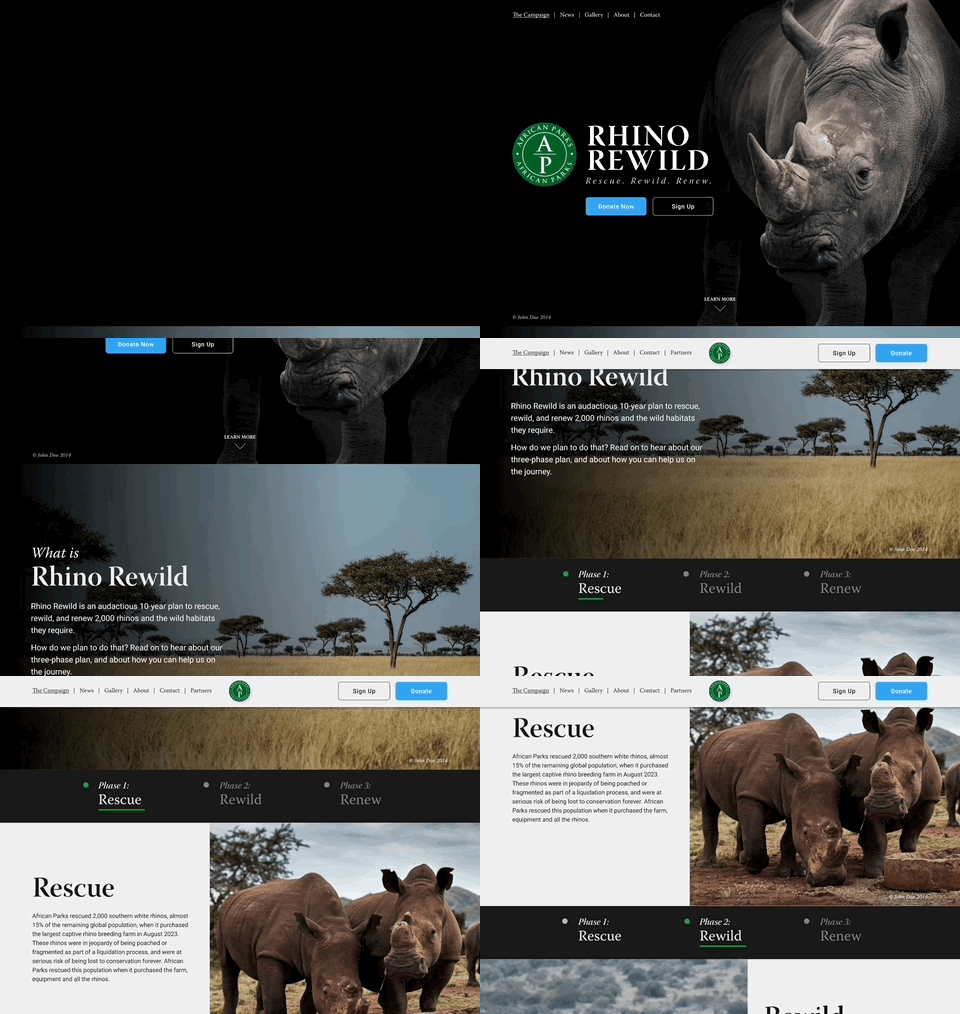
Load and scroll animations add interest to Rhino Rewild's homepage.
Phase 2:
Donation Flow
Designing the "Rewild a Rhino" Donation UX
A key goal from the start of the project was to create a donation experience that felt as unique and meaningful as the campaign itself. The core idea: let patrons help fund the relocation of one of 2,000 rhinos being rewilded across various wilderness areas in Africa.These rewilding efforts carry a significant cost—typically over $1,000 per rhino, depending on the destination. This created a unique design challenge: how do we build a system that appeals equally to:
Individual donors
Individuals wanting to contribute smaller amounts (under $100), who still want to feel a personal connection to the project.
Large donors
Individuals or organizations able to fully sponsor a rhino’s relocation cost and receive special recognition for their contribution.
UX Solution: A Branching Donation Flow
To serve both audiences, I designed a donation experience that branches at the very beginning, allowing users to choose how they want to participate:
Group Sponsorship (Individual donors)
Users are taken to a collective funding interface, where they can contribute any amount toward a specific rhino—similar in spirit to a GoFundMe. Progress bars and running totals show how close that rhino is to completing funding.
Full Sponsorship (Large donors)
Users are guided to an interim page where they can select from different price tiers based on destination region. They’re then matched with a rhino to sponsor individually, with a personalized profile and story.
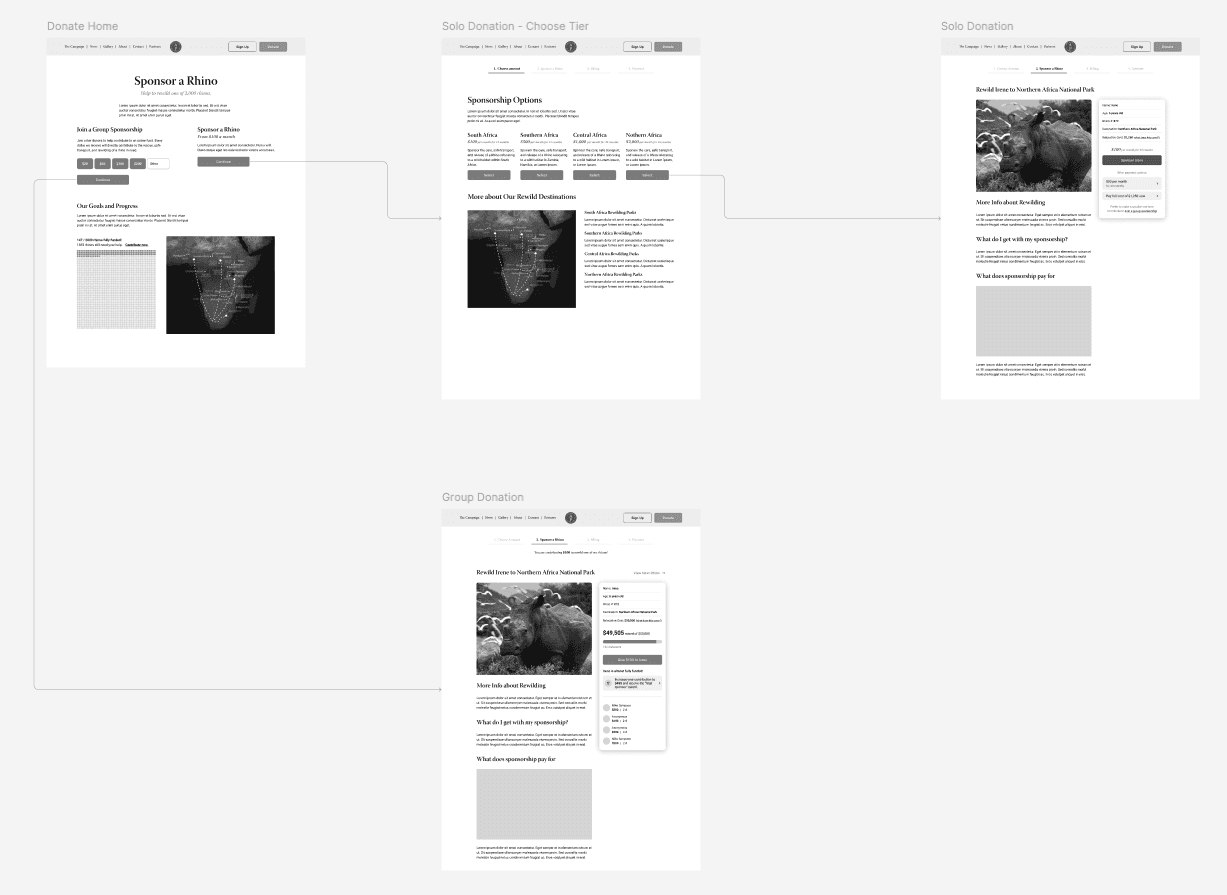
This branching flow was first mapped out in mid-fidelity wireframes to align the team and clarify the user journey. As we moved forward, the visual and verbal cues were refined through testing and feedback to improve clarity and conversion across both paths.
Phase 3:
Refining Donation UX
Refining the Landing Page Language and Presentation
As the donation flow took shape, I iterated on the landing page language and visual presentation to improve clarity between the two sponsorship paths.
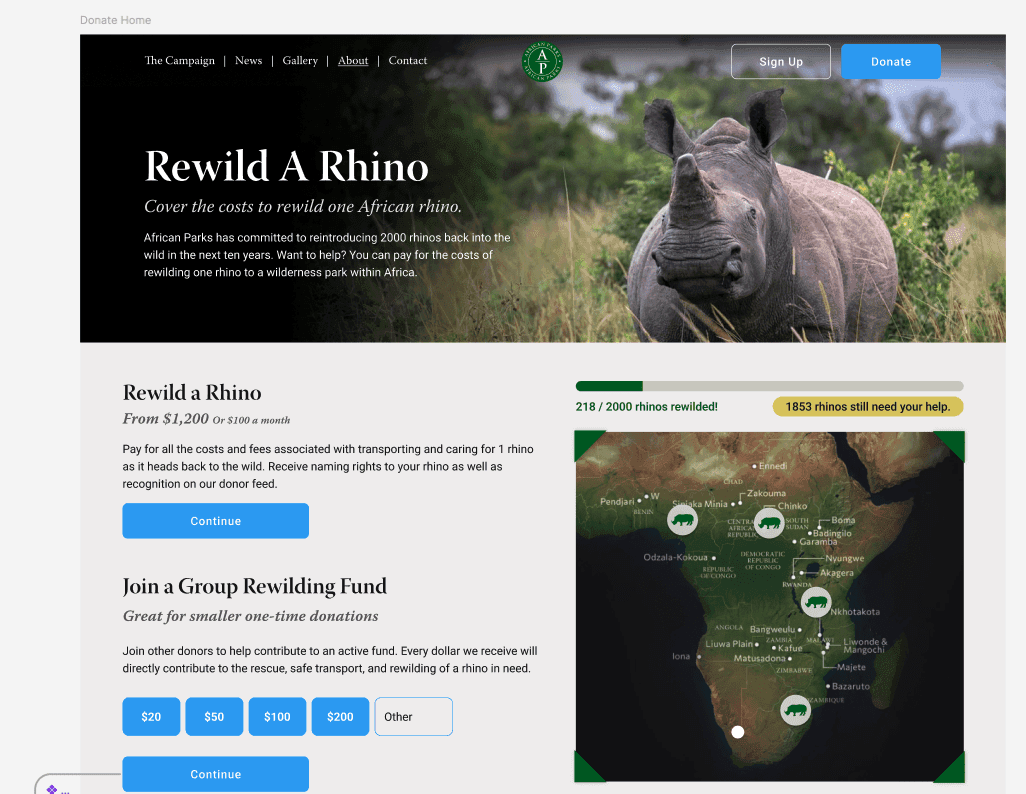
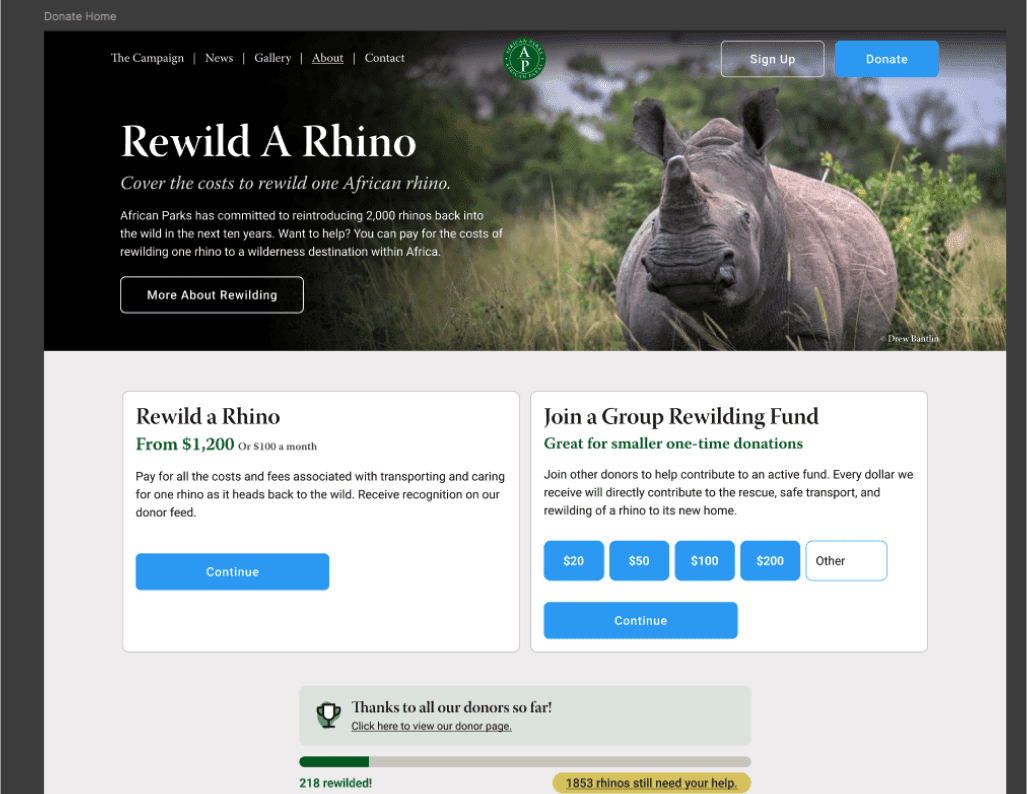
V1: Donation flows described as "Rewild a Rhino" and "Join a Group Rewilding Fund".
V2: This iteration added more visual emphasis on these two distinct options.
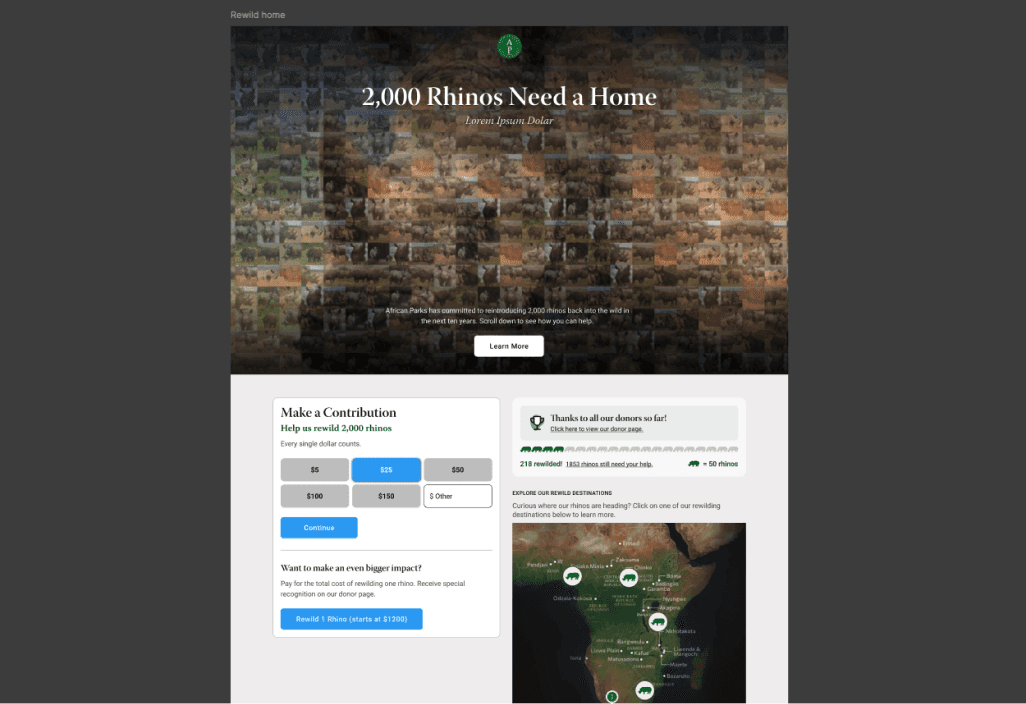
Final: Introduced a full-screen hero composed of hundreds of tiny rhino photos, creating a “2,000 rhinos” visual metaphor. This conveyed the campaign’s scope instantly.
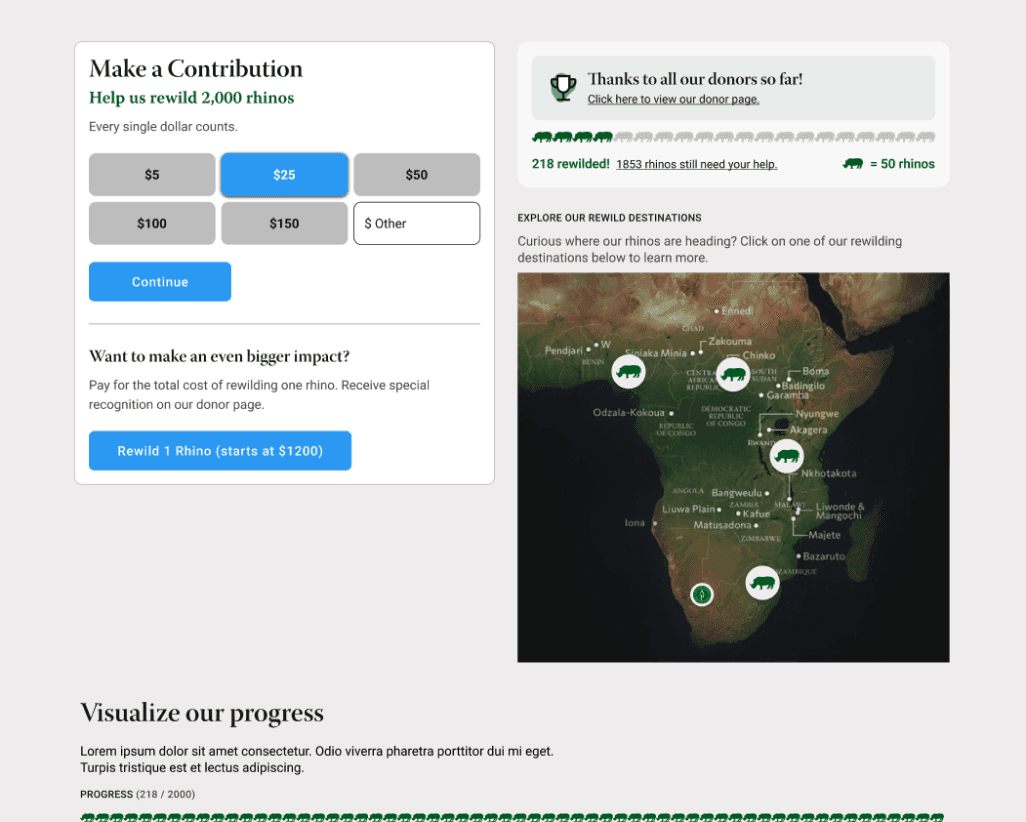
Rebalanced emphasis: the “Join a Group Fund” card is slightly larger (to welcome small donors), while “Sponsor a Rhino” remains prominent for high-value contributors. Added progress bar at the bottom showing “X of 2,000 rhinos funded” to drive urgency.
Interactivity and Animation
Beyond the core flows, I added interactive elements that reinforced the campaign narrative and gave the site a level of craft befitting the cause.
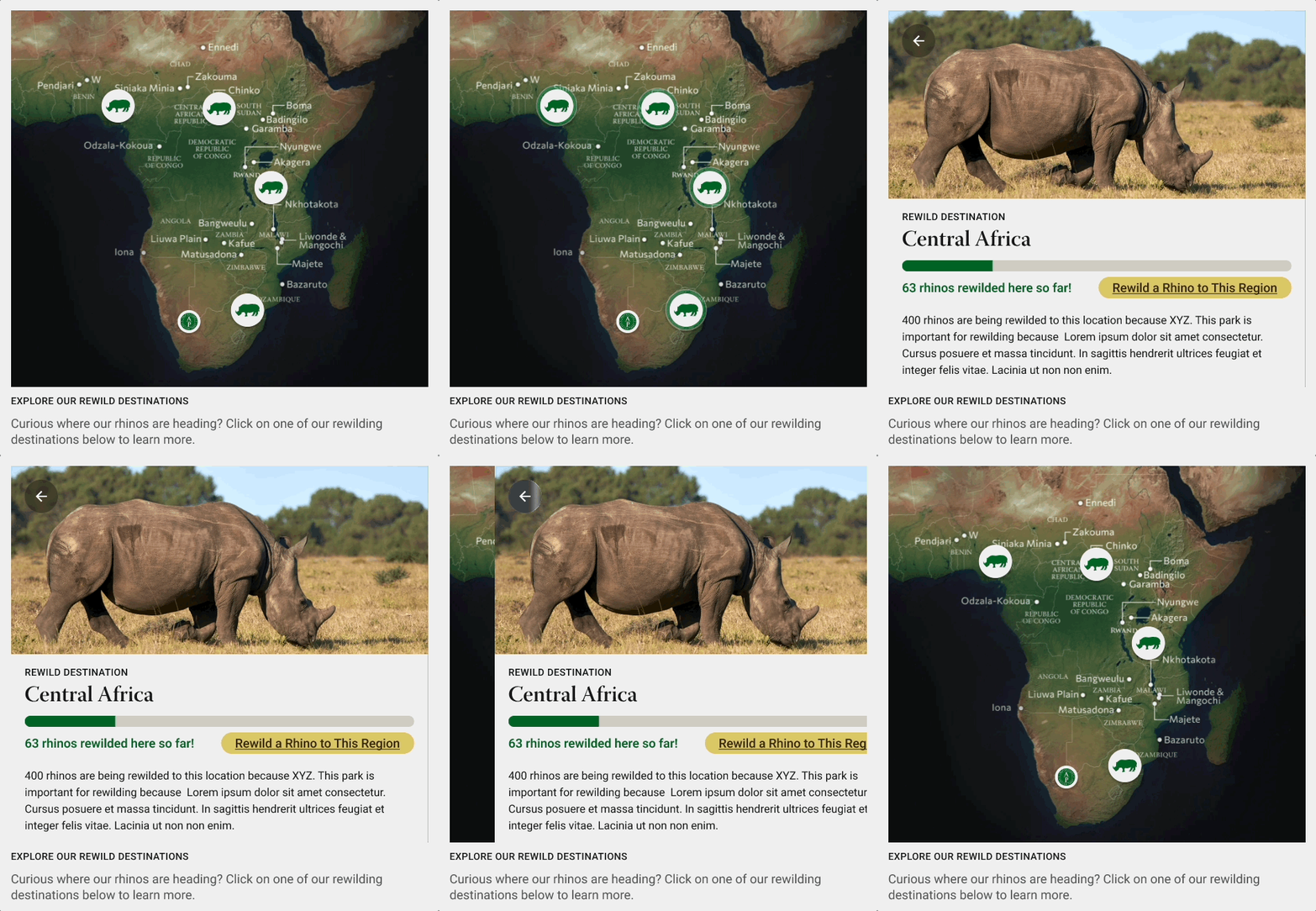
An interactive map feature allowed users to learn more about the campaign, as well as highlighting the difference in "price tiers" for different rhinos.
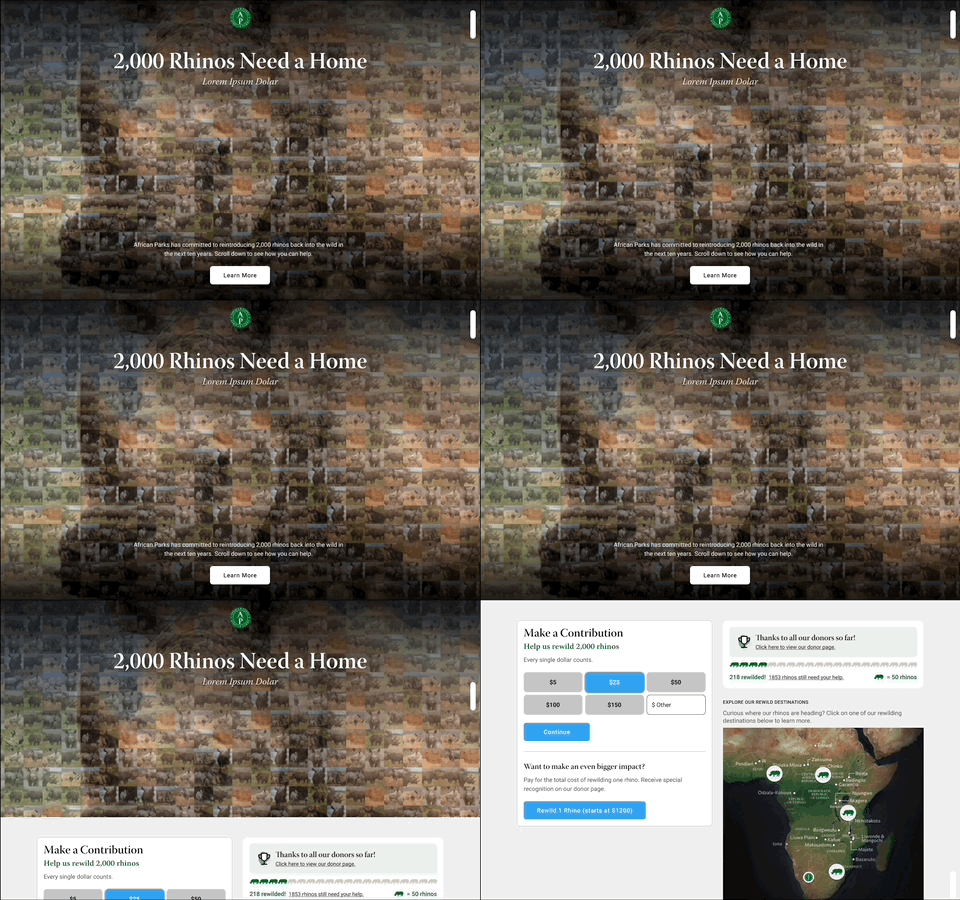
The donation landing page hero features a subtle background animation, and remains fixed in place when scrolling down to create a parallax effect. Both these design choices were made to give this page a bit of extra visual polish that was important to African Parks.
Phase 4:
Design Handoff
Final Designs
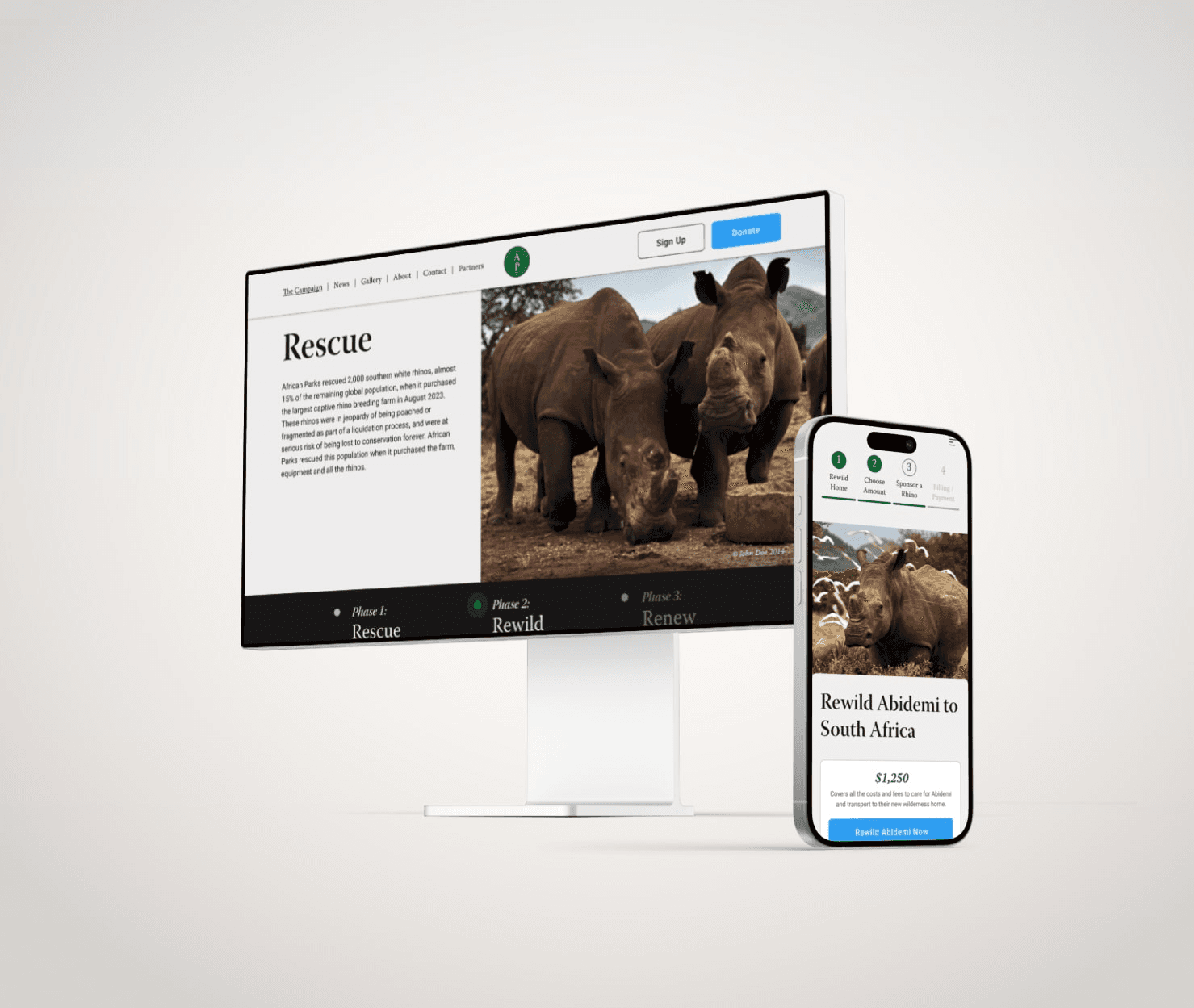
The final designs deliver a streamlined, visually engaging microsite that clearly communicates the mission of Rhino Rewild. Key features include an intuitive donation platform optimized for mobile and desktop, compelling storytelling through impactful imagery and subtle animation, and accessible navigation that guides users effortlessly toward supporting conservation efforts. Feedback from iterative testing informed improvements in layout and interaction, resulting in a design that boosts conversion rates and fosters deeper emotional connection with the cause.
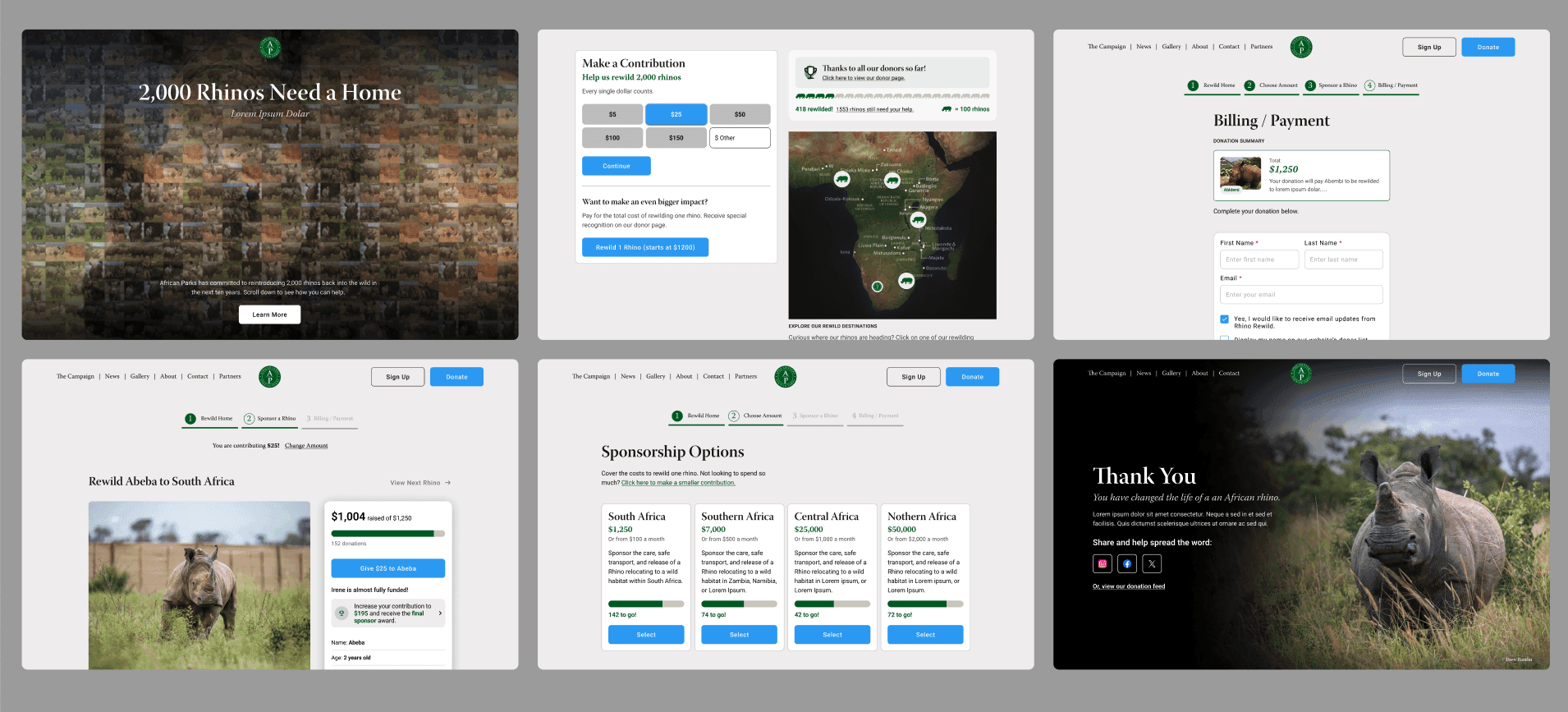
Selected screens from the final desktop designs. Additional features included a breadcrumb navigation to clarify the flow, a billing and payment screen that clarified user choices, and a thank you screen that encouraged social sharing functionality.
Project Takeaways
Designing Rhino Rewild reinforced that donation experiences need to feel personal, not transactional. The branching flow — letting users self-select into group or full sponsorship — was the key UX decision, because it respected the reality that a $25 donor and a $5,000 sponsor have fundamentally different motivations. The biggest challenge was making the smaller contribution feel just as meaningful as the large one; progress bars and collective funding mechanics helped close that gap. This project also sharpened my thinking around performance vs. visual impact tradeoffs — the video hero concepts were attractive but the wrong choice for a fundraising site where every second of load time affects conversion.